Tuesday, 5 June 2012

Pemakanan Untuk Masalah Jerawat

Jika anda fikir makanan bergoreng dan coklat adalah punca permasalahan kulit berjerawat. Fikir semula. Masalah jerawat biasanya disumbangkan oleh keturunan dan hormon. Sepanjang tempoh baligh, peningkatan hormon lelaki androgen (wanita juga tidak terkecuali) meningkatkan penghasilan sebum, yang bertanggungjawab memelihara kelembapan kulit, serta keratin, yang diperlukan oleh rambut. Apabila penghasilan berlebihan, maka terjadilah sumbatan pada folikel rambut atau bulu, dan jerawat muncul.
Pengambilan makanan yang penuh berminyak, mungkin tidak memberi sebarang perubahan signifikan pada anda, tetapi apa yang boleh memberi perubahan ialah pengambilan positif seperti sayur-sayuran, buah-buahan dan makanan lain yang membantu kestabilan hormon dan melawan keradangan/inflamasi.

Ambil pen dan kertas! Mula mencatit. Di bawah ialah antara vitamin dan mineral yang dipreskripsi:

1) Selenium
Selenium ialah sejenis antioksidan yang berkuasa yang mampu membantu permasalahan kulit berjerawat, dengan melindungi sel-sel kulit dari kerosakan akibat keradangan serta mengekalkan fleksibititi kulit. Selenium bekerjasama dengan vitamin E dan A, jadi makanlah kekacang, buah-buahan dan sayur-sayuran berwarna merah/jingga yang kaya dengan vitamin tersebut.
Antara makanan yang kaya dengan selenium ialah kacang brazil, makanan laut, daging ayam, telur, daging merah, biji bunga matahari, cendawan butang/shitake/crimini, bawang dan bijirin penuh.

2) Zink
Tiada siapa yang tahu, tetapi pengambilan zink mampu meminimakan masalah jerawat. Mungkin kerana zink membantu pengawalan produksi hormon androgen. Zink juga membantu badan menyerap vitamin A, yang juga merupakan penting dalam mengekalkan kesihatan kulit.
Sasaran: Purata keperluan bagi lelaki ialah 12 mg dan wanita pula 7 mg. 6 ekor tiram (~90g) membekalkan 40mg total zink, manakala 100g daging merah membekalkan sekitar 4-5mg zink.
Vegetarian yang tidak mengambil sebarang produk haiwan mungkin memerlukan nasihat pakar pemakanan dan supplemen.

3) Asid Lemak Omega-3
Ahli dermatologi berpendapat asid lemak omega-3 mengawal keradangan, dan dalam masa yang sama membantu pengawalan masalah jerawat. Ikan berlemak seperti salmon, sardin, dan ikan air tawar kaya dengan asid lemak omega-3. Sumber lain seperti kanola, linseed, dan kacang walnut juga kaya dengan asid lemak omega-3.
Sasaran: Ambil ikan yang kaya dengan asid lemak omega-3 sekurang-kurangnya 2 hidangan seminggu. Jadikan walnut dan kekacang lain yang kaya dengan asid lemak omega-3 sebagai snek harian.

4) Beta-karoten
Beta karoten kebanyakannya ditemui dalam buah-buahan dan sayur-sayuran berwarna kuning, merah dan jingga. Beta karoten ditukarkan kepada vitamin A dalam badan-- dan meningkatkan kebaikan selenium pada kulit.
Sasaran: sekurang-kurangnya 1/2 cawan sayur-sayuran berwarna jingga/merah/kuning sehari.

5) Vitamin E.
Anti-oksidan Vitamin E membantu penyembuhan kulit dari kerosakan dan parut jerawat. Tidak mudah untuk mendapatkan vitamin E melalui pemakanan rendah lemak kerana sumber terbaik vitamin E ialah minyak sayuran, lemak daging/ayam dan ikan serta kekacang. Bijirin penuh dan sayuran berdaun hijau juga mengandungi vitamin E dalam kadar sederhana.
Sasaran: Saranan pengambilan harian ialah 7-10mg. 1 sudu makan minyak kanola membekalkan 4mg vitamin E, 100g sardin pula mempunyai 3mg vitamin E.
 
6) Vitamin C
Vitamin C akan melindungi kulit dari kesan parut jerawat. Bioflavonoid yang selalu bersama dengan vitamin C bertindak sebagai anti-keradangan semulajadi yang seterusnya meningkatkan potensi penyembuhan pada vitamin C.
Sasaran: makan makanan tinggi Vitamin C secukupnya sekurang-kurangnya 250mg, sebolehnya 500mg sehari. 1/2 cawan lada benggala membekalkan 150mg, manakala sebiji strawberi membekalkan 110mg.

7) Sayur-sayuran dan buah-buahan segar, Bijirin penuh
Apabila saintis melaksanakan kajian pemakanan remaja di Pulau Kitavan, New Guinea dan Kawasan Ache Paraguay, di mana tiada satu pun kes jerawat ditemui. Mereka menyimpulkan ia kerana pemakanan remaja disana yang kaya dengan buah-buahan dan sayur-sayuran segar seperti keladi dan sayuran hijau, serta rendah makanan terproses seperti gula putih dan gandum putih, penyebab peningkatan hormon. Apabila remaja yang memiliki gen yang serupa berhijrah ke kawasan barat dan mula mengambil makanan terproses, mereka mula mengalami masalah jerawat buat pertama kali.
Penyelidik dari RMIT di Melbourne menkaji belia lelaki yang mengalami masalah jerawat, membandingkan tipikal pemakanan barat iaitu makanan terproses dengan makanan rendah indeks glisemik (lebih bijirin tidak terproses, buah-buahan dan sayur-sayuran serta lebih protein). Mereka mendapati selepas 3 bulan, masalah jerawat belia yang mengambil makanan rendah GI berkurangan sebanyak 50%, yang bermaksud pengambilan makanan yang kurang terproses memberi kesan berbeza pada kesihatan kulit.
Sasaran: Sekurang-kurangnya 9 hidangan buah dan sayur sehari. Sehidangan secara amnya bersamaan dengan 1 biji buah bersaiz sederhana, 1 cawan sayur mentah, 1/2 cawan buah/sayur masak/tin. Pilih bijirin penuh seperti beras perang, roti bijirin penuh, pasta bijirin penuh, oat berbanding dengan pilihan terproses.

Supplemen Nutrien:
1) Multivitamin/mineral
Beberapa nutrien, termasuk vitamin E dan Selenium adalah penting dalam pengawalan jerawat. Anda akan dapati kedua-duanya dalam kebanyakan multivitamin.
Dos: Sebiji sehari
* klik link untuk mendapatkan alternatif supplemen.

2)Kromium
Sebahagian pakar pemakanan mungkin menyarankan pengambilan kromium untuk mengatasi masalah jerawat. Terdapat bukti yang mengaitkan kromium dengan penggunaan insulin yang lebih baik dan terdapat juga bukti yang mengaitkan masalah jerawat dengan kekurangan sensitiviti insulin. Kerana kromium akan menggalakkan reaksi rendah gula darah, periksa dengan doktor sebelum mengambil supplemen.
Dos: 200mcg sehari

Rujukan: Food Cures, Breakthrough Nutritional Prescriptions For Everything From Colds To Cancer, 2010


Monday, 21 May 2012

Sport Nutrition Myth: Carbohydrate Loading

What's the purpose of carbohydrate loading? To maximize glycogen stores, a major source of fuel in the muscles during endurance activity. This stores will allow athlete to compete at his/her goal race pace for a greater duration during the event. Unfortunately, there are several myths or misconception in interpreting the concepts of carbo-loading. Athletes whose performance could benefit from carbo-loading are not doing it ir their method of implementation is improper. On the other hand, the athletes won;t get the benefits. Below are debunked common myths about carbo-loading.


Myth #1:  Make sure you load up on carbs the night before the event.  
Fact:  While a night treat at mamak stall or restaurant may be fun to attend the night before an event, it is not the ideal protocol for carbohydrate loading before endurance training or competition. Carb loading involves a gradual increase in carbohydrate intake along with a tapering down in physical activity within several days before the endurance activity.  The best carb loading regimen will depend on the athlete's individual needs and training plan.  It's also important to keep in mind that maintaining an optimal performance diet throughout training is one of the best ways to prepare for competition day.

Myth #2:  Training for a 5K?  Make sure to carb load before your event.  
Fact:  Carb loading optimizes performance for athletes participating in intense, continuous exercise that lasts greater than 90 minutes.  Most athletes competing in 5K's, 10K's, or shorter, less intense activities will not necessarily experience improved performance from carb loading.  Carb loading is effective in endurance-trained athletes since training stimulates the activity of the enzyme used to support the formation of glycogen.  Also, carb loading may hinder performance of some athletes due to stiffness or heaviness as the body's glycogen stores increase.  

Myth #3:  Eat all the carbs you can because you're going to need it.  
Fact:  Athletes competing in endurance events or repeated bouts of continuous activity over a long period of time do need to consume enough carbohydrate to fuel their activity.   However, it does not mean this is a free ticket to eat any and every source of carbohydrate you can get your hands on.  Quality and quantity do make a difference.  It is essential to include high quality sources of carbohydrate, such as whole grains, fruits, vegetables, and legumes, since these foods also offer a score of other nutrients necessary for promoting physical performance.  At the same time, it's also not time to go overboard on cookies, donuts, and ice cream as these foods are not the highest quality sources of carbohydrates.  They may also contribute more to "fat gain" than "glycogen storage" as well as undesirable visits to the Port-o-Potty on race day.  The body still needs the right balance of high quality sources of protein, fat, and other nutrients for the best performance nutrition.

Myth #4:  If you're going to carb load, you need a supplement.
Fact:  While the amount of carbohydrate needed for carb loading is higher than usual for the athlete, it is usually an amount that can be consumed through high quality sources of carbohydrates.  Not only will these foods provide carbohydrate, but they will also provide other valuable performance nutrients.  So supplements are probably not necessary unless the volume of food needed to meet carbohydrate needs may be more than the tummy can take. For example, I worked with a triathlete who could not tolerate the larger amounts of food needed for carb-loading.  So, we included carb supplements in her nutrition plan.

Parent's Guide: Why Breakfast is Essential?

Backpack? Check!  Pencils?  Check!  Loose-leaf paper? Check!  Breakfast?  If you're a parent getting your student ready to go back to school soon, then you may want to consider adding breakfast to the checklist of back-to-school necessities.  A daily breakfast will help prepare your child for school in many ways that books, pencils, and papers cannot.  So before shuttling your children out the door and onto the classroom, check out these 5 reasons that breakfast is essential to your student's health and well-being.
 
Reason #1:  Better academic performance
Without breakfast, some children may go for up to 18 hours before their next meal.  A nutritious breakfast will provide the fuel and nutrients that your child's brain needs for better memory and focus during school.  Studies have shown that children who eat breakfast tend to perform better academically than their breakfast-skipping peers.  It appears that consuming breakfast may help with numerous skills, such as math, reading, and memory.  Not only has breakfast consumption been tied to enhanced test scores, but it has also been associated with better attendance and punctuality.

Reason #2:  Better nutritional intake
Breakfast contributes significantly to the overall energy, vitamins and minerals that children need to sustain their scholastic activities, especially in the morning.  Studies link student breakfast consumers with more nutritionally adequate diets that are higher in nutrients, such as protein, calcium, iron, fiber, and vitamins A and C.  On the other hand, breakfast skippers tend to have lower intakes of nutritious foods, like vegetables and fruits. 

 
Reason #3:  Better psychosocial health and behavior
Breakfast consumption among students has been associated with improvements in psychosocial health, which involves the way a child thinks, feels, or interacts with others.  The affect seems to be most apparent among those students with poorer nutritional status or with low nutrient intakes.  Progress with behavior, such as hyperactivity, has also been observed.

Reason #4:  Healthier weight
Most, but not all, studies have reported that children who are overweight tend to skip breakfast more frequently than children who are at healthy weights.  In fact, adolescents who regularly consumed breakfast or who increased their consumption of breakfast maintained better weight control in long-term studies.  Researchers propose several theories about how regular breakfast consumption promotes healthier body weights, including improved appetite regulation, enhanced diet quality, and reduced calorie intake. 

Reason #5:  Development and maintenance of a lifelong health habit
Studies have shown that children who skip breakfast are more likely to become adults who skip breakfast.  In fact, breakfast skipping appears to increase with age, so it's important to help children establish the habit while they're young.  Routine breakfast intake during adulthood has been associated with positive benefits, such as improved weight control, fewer cardiovascular risk factors, and improved memory

Penurunan Berat Badan: Diet atau Senaman, Mana Lebih penting?

Mana lebih penting bagi penurunan berat badan? Diet atau Senaman. Realitinya, individu yang ingin menurunkan berat badan akan memfokuskan usaha mereka, dan persoalan di atas akan muncul. Jadi, diet atau senaman? Kebanyakan kajian dan pemerhatian, bukti menunjukkan hanya dengan perubahan diet akan menurunkan berat badan lebih banyak berbanding dengan bersenam. Bagi beberapa individu merasakan ianya logik dan sebahagian mungkin terkejut dengan kenyataan di atas. Ramai percaya bersenam akan lebih berkesan, dan mereka berusaha ke arah itu. Walaubagaimanapun,tanpa perubahan diet, kebanyakan individu akan bersusah payah untuk menurunkan berat badan secara signifikan dengan hanya bersenam.

Kenapa? Kenapa kalau bersenam sahaja tidak mampu memberi kesan signifikan pada penurunan berat badan?
Terdapat kira-kira 3500 kalori dalam ~0.5 kilogram lemak. Jadi untuk mengurangkan 0.5kg lemak seminggu, anda perlu mengurangkan 500 kalori sehari. Contohnya, seseorang yang memiliki berat 68 kilogram. Jika dia hanya memfokuskan pada senaman untuk mengurangkan 0.5 kg seminggu, dia perlu membakar sekurang-kurangnya 500 kalori atau lebih sehari. Ini bersamaan dengan berlari 5 km sehari atau berbasikal 56 minit sehari atau berenang sejam sehari. Saya tidak menyangkalkan keberkesanannya, tapi ia sangat sukar bagi individu untuk melakukan perubahan sedemikian. Kita sering mendengar individu yang bersenam bagai nak rak tapi kesan penurunan berat badan yang sedikit dan tekanan perasaan meningkat.
Dalam sudut lain pula, jika individu ini ingin memfokuskan pada perubahan diet bagi menurunkan jumlah berat yang sama iaitu 0.5kg, dia perlu mengurangkan 500kalori sehari dari diet hariannya. Macam mana? berbanding dengan 4 sudu gula dalam segelas teh, pilih 1 sudu -- anda jimat 180 kalori. Berbanding dengan 4 senduk nasi untuk makan malam, ambil hanya 2 senduk nasi -- anda jimat  150 kalori. Berbanding dengan 2 sudu mentega kacang, anda ambil 1 sudu sahaja- anda jimat 45 kalori. Senang sekali! Anda tukar tabiat meminum air manis kepada air kosong -- anda jimat kalori gula antara 60- 480 kalori (1 sudu = 60 kalori), tukar tabiat 'snacking' dengan keropok, roti berkrim, biskut manis kepada hidangan buah-buahan-- anda jimat 200 - 600 kalori (bergantung kepada porsi dan jenis makanan) dan buah sehidangan hanya 60 kalori!!

Akhirnya--- kombinasi kedua-dua teknik iaitu perubahan diet dan aktiviti fizikal adalah strategi terbaik bagi pengurusan berat badan jangka masa panjang.
Bakarlah ~250 kalori sehari melalui senaman dan ubahlah pengambilan kalori kepada kurang 250 adalah pendekatan yang halus dan fleksibel bagi kebanyakan individu. Sementara, lebih bersenam akan membawa kesan yang lebih memberangsangkan, anda boleh mulakan dengan perubahan kecil ke yang lebih besar. Tambahan pula, aktiviti fizikal memberi kesan penjagan kesihatan lebih dari sekadar penurunan berat badan -- mengurangkan risiko penyakit kronik seperti jantung, kencing manis, dan kanser, menguatkan otot dan tulang, meningkatkan kesihatan mental dan kesejahteraan, tidur yang berkualiti dan banyak lagi!
Bahkan, doktor akan menasihatkan bersenam sepertimana mereka memberi ubat-ubatan kepada pesakit.
Kesan sampingan aktiviti fizikal ialah individu cenderung untuk makan lebih banyak apabila mereka aktif.
Meskipun, kebanyakan individu yang mula bersenam akan lebih menjaga pemilihan pemakanan mereka, sebahagian memilih untuk makan sepuas-puasnya seperti meng'qada' kalori yang dibakar.
Walau apa pun, kajian mengatakan individu yang memilih untuk bersenam sebagai rutin harian akan memiliki berat badan yang lebih terurus dalam jangka masa yang panjang.
Kita mungkin tidak mempunyai epidemik berlebihan berat badan atau obesiti dalam negara, tetapi kita mempunyai epidemic pemakanan yang kurang sihat dan aktiviti fizikal yang tidak mencukupi. Ini adalah punca utama masalah kesihatan kebanyakan individu, dan masalah berlebihan berat badan adalah simptom hasil dari punca masalah. Daripada kita memfokuskan usaha kita untuk mendapatkan nombor tertentu pada alat penimbang, Saya menggalakkan anda untuk fokus pada tabiat pemakanan iaitu pengambilan makanan bernutrisi dan semaikan tabiat bersenam dalam kehidupan seharian. Berat badan, bersama-sama dengan kebaikan kesihatan yang lain, akan turut sama.


Weight loss: Better to cut calories or exercise more?


Which is better for weight loss — cutting calories or increasing exercise?

Answer

from Donald Hensrud, M.D.
Cutting calories through dietary changes seems to promote weight loss more effectively than does exercise and physical activity. But physical activity also is important in weight control.
The key to weight loss is burning more calories than you consume. Because 3,500 calories equals about 1 pound (0.45 kilogram) of fat, you need to burn 3,500 calories more than you take in to lose 1 pound. So if you cut 500 calories from your diet each day, you'd lose about 1 pound a week (500 calories x 7 days = 3,500 calories).
For most people, it's probably too difficult to eliminate the amount of calories through exercise that you could through dieting. That's why cutting calories through dieting is generally more effective for weight loss. But doing both — cutting calories and exercising — can help give you the weight-loss edge. Exercise can help burn off even more calories than just dieting.
Exercise also is important because it can help you maintain your weight loss. Studies show that people who lose weight and keep it off over the long term get regular physical activity. If you lose weight by crash dieting or by drastically restricting yourself to 400 to 800 calories a day, you're more likely to regain weight quickly, often within six months after you stop dieting. Getting regular exercise also can help prevent excess weight gain in the first place.

Reference : www.mayoclinic.com

Tuesday, 15 May 2012

21 Ways To Lose Weight Without Dieting


Time Your Meals1. Time Your Meals
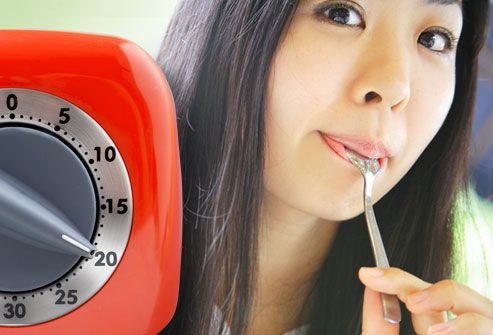
Set a timer for 20 minutes and reinvent yourself as a slow eater. This is one of the top habits for slimming down without a complicated diet plan. Savor each bite and make it last until the bell chimes. Paced meals offer great pleasure from smaller portions and trigger the body fullness hormones. Wolfing your food down in a hurry blocks those signals and caused overeating.


2. Sleep More, Weigh Less
Sleeping an extra hour a night could help a person drop 14 ponds in a year, according to a University of Michigan researcher who ran the numbers for a 2500 calorie per day intake. His scenario shows that when sleep replaces idle activities - and the usual mindless snacking - you can effortlessly cut calories by 6%. Result would vary for each person, but sleep may help in another way, too.There's evidence that getting too little sleep revs up your appetite, making you uncommonly hungry.


Woman Eating Vegetables on Fork3. Serve More, Eat More Veggies.
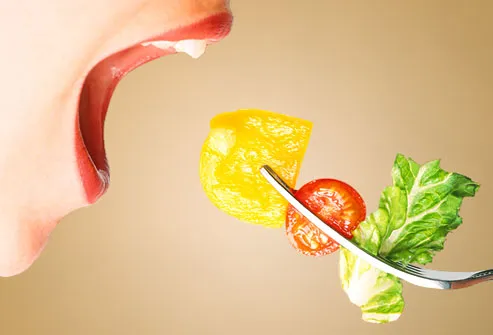
Serve three vegetables, with dinner tonight, instead of just one, and you'll eat more without really trying. Greater variety tricks people into eating more food - and eating more fruits and vegetables is a great way to lose weight. The high fiber and water content fills you up with fewer calories. Cook them without added fat. And season with lemon juice and herbs rather than drowning their goodness in high fat sauces or dressings.


Bowl of Minestrone Soup4. When Soup's On, Weight Comes Off
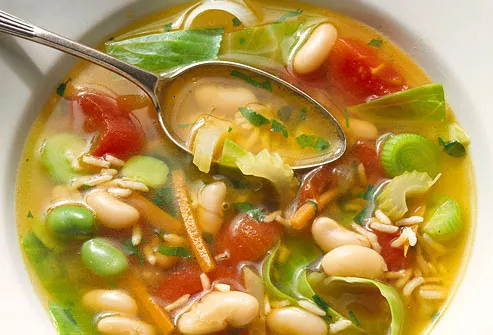
Add a broth-based soup to your day and you'll fill up on fewer calories. Think chinese won-ton,mix vegetables soup etc. Soup's especially handy at the beginning of a meal because it slows your eating and curbs your appetite. Start with a low sodium broth or canned soup, add fresh or frozen vegetables and simmer. Beware of creamy soups, which can be high in fat and calories.


Woman Eating Healthy Sandwich5. Go for Whole Grains
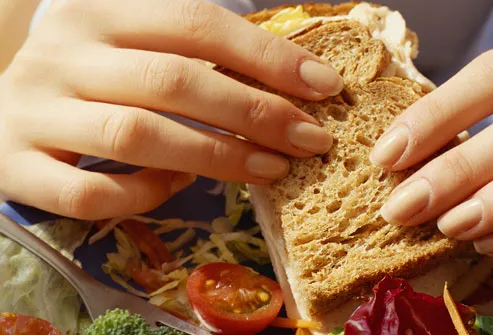
Whole grains such as brown rice, barley, oats, buckwheat and whole wheat also belong in your stealthy weight loss strategy. They help fill you up with fewer calories and may improve your cholesterol profile, too. Whole grains are now in many products including breads, pastas, pizza crust and cereals.


6. Eyeball your S-sized Clothes
Hang on old favourite dress, skirt or pants where you'll see them every day. This keeps your eyes on the prize. Choose an item that's just a little too snug, so you reach this reward in a relatively short time. Then pull out last year's dress for your next small, attainable goal.

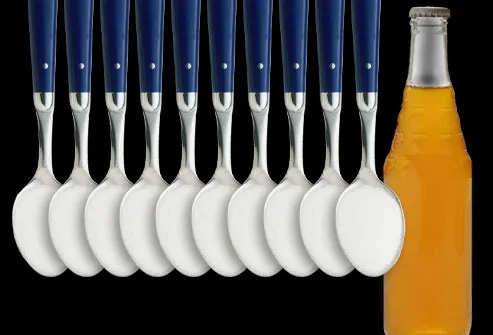
Spoons of Sugar and Soda Bottle7. Sip Smart : Cut Back on Sugar
Replace one sugary drink with water and you'll avoid about 10 teaspoons of sugar. Add lemon, lime, mint, berries for flavor and fun.

8. Sip smart: Use a Tall, Thin Glass
Use a tall, skinny glass instead of a short, wide tumbler to cut liquid calories - and your weight - without dieting. You'll drink 25% - 30% less juice, soda, and any other beverages.
How can this work? Brian Wanswink, PhD, says visual cues trick us into consuming more or less. His tests at Cornell University found all kinds of people poured more into a short, wide glass - even experienced bartenders.


Cup of Green Tea9. Sip smart: Go for green tea
Drinking green tea may also be a good weight loss strategy. Some studies suggest that it can rev up the body's calorie-burning engine temporarily, possibly through the action of phytochemicals called catechins. At the very least, you'll get a refreshing drink without tons of calories.


10. Slip into a Peaceful State of Mind
Woman who are less stress will resist overeating. Women who do yoga tend to weigh less than others, according to a study in the journal of the ADA. What's the connection? The yoga regulars reported a more mindful approach to eating. For example, they tend to notice the large portions in restaurants but eat only enough to feel full. That's for those who slip into yoga, muslims find peace during performing their daily prayers. Other religion might have their own way too.

Dinner at Home


11. Eat at Home
Eat home-cooked meals at least five days a week. A reports survey found this was a top habit of 'successful losers'. Sound daunting? Cooking may be easier than you think. Shortcut foods can make for quick meals, such as pre-chopper lean beef or poultry, washed lettuce, pre-cut vegies, canned beans and so many other choices.


Last Bite of Pancakes


12.Catch the 'Eating Pause'
Most people have  a natural 'eating pause', when they drop the fork for a couple of minutes. Watch for this moment and don't take another bite. Clear your plate and enjoy the conversation.This is the quiet signal that you;re full, but not stuffed. Most people miss it.


13. Chew strong Mint gum.
Chew sugarless gum with a strong flavor when you're at risk for a snack attack. Making dinner after work, socializing at a party, watching TV, or surfing the Internet are a few dangerous scenarios for mindless snacking. Gum with a big flavor punch overpowers other foods so they don't taste good.

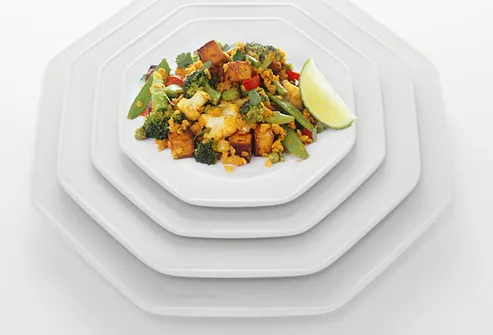
Smaller Portions14. Shrink Your Dishes
Choose a 10-inch lunch plate instead of a 12-inch dinner plate to automatically eat less. Cornell's Brian Wansink, PhD, found in test after test that people serve more and eat more food with larger dishes. Shrink your plate or bowl to cut out 100-200 calories a day - and 10-20 pounds in a year. In the tests, no one felt hungry or even noticed when tricks of the eye shaved 200 calories off their daily intake.


15. Get food Portions Right.
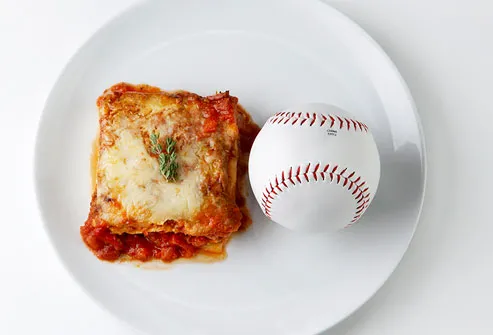
Lasagna vs. BaseballThe top habit of slim people is to stick with the modest food portions at every meal, five days a week or more. 'Always slim' people do it and successful losers do it too, according to survey. After measuring portions few times, it can become automatic. Make it easier with small 'snack' packs and by keeping servng dishes off the table at meal time.


16. Try the 80-20 Rule
Malaysians are conditioned to keep eating until they're stuffed, but residents of Okinawa eat until they're 80% full. They even have a name for this naturally slimming habit: hara hachi bu. We can adopt this healthy habit by dishing out 20% less food, according to researcher.

17. Eat out Your Way
Couple Sharing DInnerRestaurants meals are notoriously fattening, so consider these special orders that keeps portion under control:
- Split your meal with a friend (supportive friend of course)
- Order an appetizer as a meal
- Choose the child's plate/menu
- Complement smaller meal with extra vegies for the right balance.


18. Reach for Healthier Gravies/sauces
Choose marinara sauce for pasta instead of Alfredo Sauce. The tomato based tend to have fewer calories and much less fat than cream-based sauces.
Choose plain chicken soup, assam fish gravies, or vegetable soup to accompany your plain rice.
But remember, portion size still counts.

19. Go meatless more often.
Eating vegetarian meals more often is a slimming habit. Vegetarian tend to weigh less than meat eaters. While there are several reasons for this, legumes may play an important role. It is simply packed with fiber, which most of us get only half of this important nutrient, which fills you up with fewer calories.

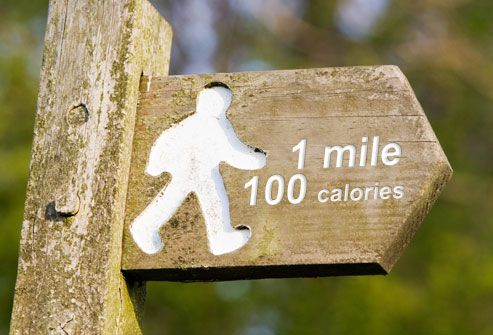
1 Mile=100 Calories20. Burn 100 calories more
Lose 10 pounds in a year without dieting by burning an extra 100 calories everyday. Try one of these activities:
- walk 1 mile, about 20 min
- Pull weeds or plant flowers for 20 min
- Clean house for 30 min
- Jog for 10 min


21. CELEBRATE!
When you've kicked the soda habit or simply made it through the day without overeating,pat yourself on the back.You've moved closer to a slimming lifestyle that helps people lose weight without crazy or complicated diet plans. Phone a friend, buy new clothes, books - or on occasion, indulge in a small slice of cheesecake.


Wednesday, 25 April 2012

Ten Common Milk Myths - Busted with the Facts!

Myth #1: Consuming dairy products can lead to weight gain.
Fact: Weight gain occurs when one consumes more calories than the body can burn as energy. Contrary to this common myth, research both in animals and humans suggest that including three servings of low fat dairy foods in a calorie controlled diet may help achieve greater weight loss (Zemel, 2005). 


Clinical trials have also shown a strong correlation between increased calcium intake and reduced body weight, body fat percentage and waist size (Zemel, 2005). 
 
Myth #2: Spinach is as good a source of calcium as milk.
Fact: There is more calcium in 1 cup of milk than there is in 16 cups of spinach. One will need to eat more than 48 cups of spinach to get the recommended daily intake of calcium (USDA, 2010). Furthermore, milk contains Vitamin D which enhances calcium absorption (Wasserman, 2004).


 Myth #3: People with lactose intolerance should avoid dairy foods.
 Fact: Lactose intolerance is often confused with milk allergies. Lactose intolerance is not an allergic reaction to dairy foods. Rather it is the inability to digest the milk sugar lactose. Lactose-free milk and yogurt are good alternatives to drinking milk for people that are lactose intolerant. 

Aged cheeses such as Cheddar and Swiss are also low in lactose. Many people with lactose intolerance can drink up to 1 cup of milk daily without problems (Miller et al., 2000). 


Myth #4: Milk causes asthma.
Fact: While infants with milk allergies are more likely to develop 
asthma later in life, there are no scientific data that support that consuming dairy foods makes a person asthmatic.


Myth #5: Consuming dairy foods can increase the risk of heart disease.
Fact: A diet high in saturated fat regardless of the source will likely cause heart disease and not dairy foods. Recently, it was reported that the evidence linking saturated fat intake to heart disease is lacking (Siri-Tarino et al., 2010).
 
Furthermore, today saturated fat from butter is believed to be not as bad as trans fat filled hydrogenated vegetable fats such as margarine and other so-called ‘healthy’ spreads. Those still wishing to reduce their fat intake can consume low fat dairy foods and receive the nutritional benefits of dairy foods without the high fat (Berner, 1992; Miller, 2000). 


Myth #6: If you take calcium supplements you don’t need milk.
Fact: Milk isn’t only a good source of calcium but it also provides other high quality nutrients such as high quality protein, vitamins A, D, B12, riboflavin; zinc; potassium and magnesium. 


Fermented dairy foods such as yogurt also serve as an excellent carrier of probiotic organisms and pediatrics, which are important for gastrointestinal health.


Taking supplements does not provide the enjoyment of drinking a cold glass of milk; pouring cold milk on a bowl of cereal for breakfast; eating a creamy delicious bowl of ice cream on a hot summer day; or enjoying the pleasure of a creamy cheese sauce on nachos, or melted cheese slices on a hamburger.


Myth #7: Milk causes mucus.


Fact: After drinking whole milk or eating ice cream some people mistake the thin coat or residue in their mouth and throat for mucus. 


This is the normal creamy texture of milk fat which melts near body temperature and not excess mucus. A study conducted by Pinnock and co-workers (1990) reported that there is no association between milk and dairy products intake and mucus production in healthy as well as rhinovirus infected individuals. 


Myth #8: Humans are not designed to drink cow’s milk.
Fact: Humans are designed to eat plant as well as animal products such as meat and dairy products. Domestication of cattle (and consumption of milk and dairy foods) date back to 6000 BC.  
   
We are equipped with the lactose enzyme in our gut that aids in the digestion of cow’s milk. Consequently humans have enjoyed consuming dairy foods over many, many centuries. 


If we were restricted to consuming milk only from our own species, we would not enjoy many of the dairy foods we enjoy today; such as blue cheese on our salads, ice cream on apple pie, sour cream on baked potatoes, Mozzarella cheese on pizza, shredded cheese on our tacos, and buttermilk in our pancakes. 


Myth #9: Drinking milk can cause kidney stones.
Fact: Milk may actually protect against the formation of kidney stones (NHS, 1990). It was suggested that the calcium in milk may bind to oxalates in food so that they can no longer be absorbed by the body, reducing the risk of kidney stones.


Myth #10: Eating cheese and high fat dairy foods can cause acne.
Fact: Science does not support any link between acne and dairy foods. Importance of vitamins A and D in skin health is well established. Milk is a good source of vitamins A and D in the diet (Miller et al., 2000).


Source: Dairy Herd News - 10 Myths About Dairy Foods Dispelled 4/14/2010